
History of M&A
The concept of mergers and acquisitions (M&A) has ancient roots, with early forms of business combinations dating back to 2000-1800 BC, but the modern history of M&A is typically analyzed through distinct waves beginning in the late 19th century. The terminology and practices of M&A evolved alongside the increasing complexity of business transactions, with the terms “merger” and “acquisition” becoming more formalized during the first merger wave from 1897 to 1904.
Ancient Business Practices

Early forms of business combinations can be traced back to ancient civilizations. In Assyria, around 2000-1800 BC, investors pooled resources with merchants, forming primitive business associations.1 This practice spread to other ancient cultures, with the Phoenicians and Athenians adapting Assyrian business methods for maritime trade. In ancient Rome, Numa established separate legal personalities for groups of traders and workers, laying the groundwork for corporate organization and future mergers and acquisitions.2
First Three M&A Waves
The first three merger waves in modern history shaped the landscape of corporate consolidation and expansion:
- 1897-1904: Characterized by horizontal consolidation, creating monopolies in manufacturing, oil, mining, and steel industries. This wave ended with the 1904 stock market crash.1
- 1916-1929: Focused on creating oligopolies rather than monopolies, featuring both horizontal and vertical integration in petroleum and primary metals industries. The wave concluded with the 1929 market crash and subsequent Great Depression.2
- 1955-1975: Marked the first truly international wave, involving the US, UK, and Europe. This period saw the rise of conglomerate mergers and unrelated diversification, ending with the 1973 oil crisis.3
These waves laid the foundation for modern M&A practices and significantly influenced corporate structures and industry dynamics.

M&A Terminology Evolution
The terms “merger” and “acquisition” gained prominence during the first merger wave, reflecting the need for more precise language to describe complex business transactions
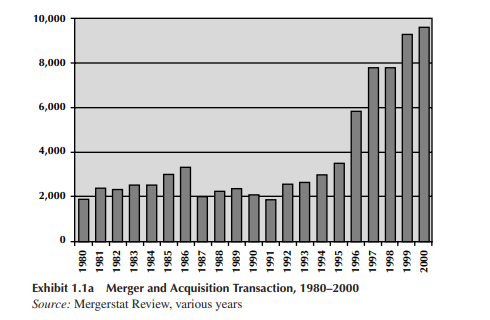
1. While often used interchangeably, these terms have distinct meanings: a merger involves two companies combining to form a new entity, while an acquisition occurs when one company purchases majority control of another2. Interestingly, the term “merger” is frequently employed strategically by acquirers to present a more amicable image of the transaction, aiming to alleviate fears and convey a message of friendly combination to employees2.
This evolution in terminology paralleled the increasing sophistication of financial markets and the development of regulatory frameworks governing corporate consolidations.